



An imagined story inspired by Greek village life and traditional beliefs about the evil eye.
Every morning, long before the village stirred, an old fisherman named Manolis walked down to the harbor. He had followed the same narrow stone path for nearly forty years, past whitewashed houses with blue shutters, cats stretched across warm doorsteps, and the little bakery where the first loaves were beginning to rise.
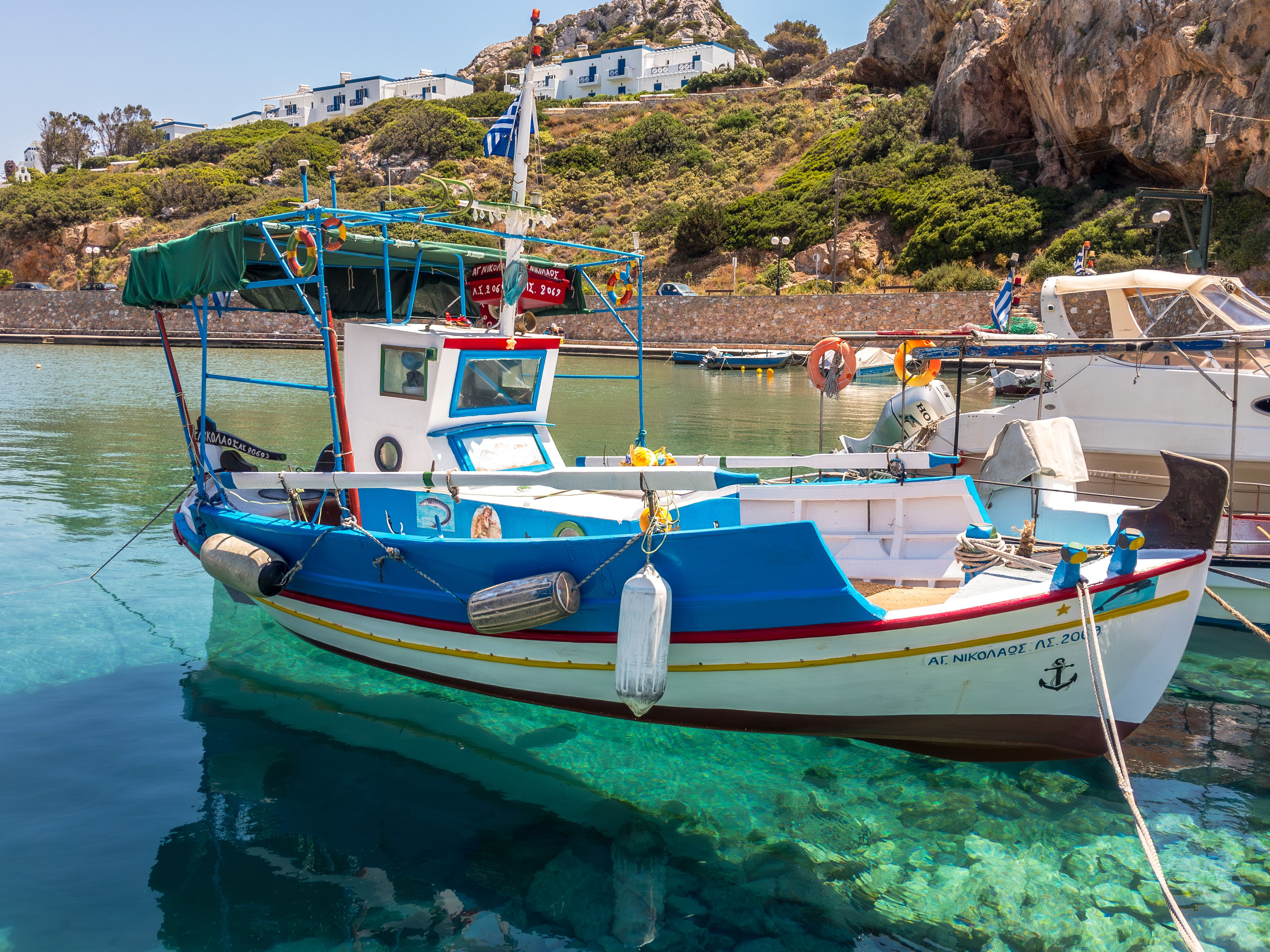
At the water's edge waited his boat.
She wasn't the largest in the harbor, nor the newest. Her wooden hull had been patched more times than Manolis could count, and the blue paint along her sides had faded under decades of sun and salt.
But she was beautiful.
Manolis had built much of her with his father, back when he was still a young man. Every plank held a memory. Every scratch told a story.
And for all those years, she had brought him home.
The boat everyone talked about
The other fisherman admired her. Visitors stopped to take photographs. Children pointed as she glided into the harbor, her nets heavy with the day's catch.
"Manolis" one of the men would call, "you have the luckiest boat in all of Greece!"
Another would laugh. "Look at those fish! Leave some for the rest of us!"
Manolis would smile, raise a weathered hand, and keep tying his ropes.
His wife, Katerina, was less comfortable with all the attention.
"Everyone has something to say about that boat," she told him one evening.
"They're only being kind."
"Maybe," she said. "But a little ftou ftou wouldn't hurt."
Manolis chuckled. He had heard those words all his life. In their village, a compliment was often followed by a quiet ftou ftou, not because anyone wished harm, but because even kind admiration, the people said, could draw the evil eye.
The morning the engine went quiet
The next morning, Manolis set out as he always did. The sea was calm, and the sky was only beginning to brighten.
He hadn't gone far when the engine sputtered and stopped.
He checked the fuel. He checked the lines. He tried again.
Nothing.
Manolis knew boats. He knew engines failed and ropes wore through, and that even a well-kept vessel could have a bad day. Still, he found himself thinking about the conversation from the night before.
Another fisherman towed him back to the harbor. Katerina was waiting at home.
"What happened?"
"The engine wouldn't start."
She looked toward the water. "Yesterday, everyone was admiring her."
Manolis sighed. "Katerina, it's an old engine."
"I know," she said gently. "But maybe we say a prayer for her anyway."
Kyria Fotini's advice
That afternoon, Katerina walked next door to see Kyrie Fotini, who had lived in the village longer than anyone could remember.
The old woman listened, then smiled.
"Boats break down," she said. "That doesn't mean someone gave yours the mati."
Katerina nodded, a little embarrassed.
"But there's nothing wrong with a prayer," Fotini went on. "My mother prayed for my father every time he went out. He still fixed his own engine, mind you. The prayer was for the sea, not the motor."
The prayer
That evening, Fotini came down to the harbor with Katerina.
Manolis was already there, sitting on an overturned crate beside the boat, his hands resting on his knees.
Fotini stood quietly at the bow for a moment, one hand resting on the wood. Then she began to pry, her voice so low that Manolis caught only pieces of it: his name, the boat, the sea, a safe return.
Katerina stood beside her with her eyes closed.
When it was finished, Katerina touched the hull the way she might touch a child's shoulder.
Manolis said nothing. But that night, he slept better than he had all week.
The next morning, a mechanic found a worn part in the engine and replaced it. Manolis paid him, shook his hand, and thanked him.
On his way home, he stopped at Fotini's door and thanked her, too.
What manolis heard
A few mornings later, the old fisherman was back at sea.
The engine hummed steadily beneath him. The nets lay neatly at his feet, and the rising sun turned the water gold.
As he came into the harbor that afternoon, a young boy standing beside his grandfather pointed at the boat.
"Look, Páppou! Isn't she beautiful."
The grandfather smiled. "Very beautiful."
Then, almost without thinking, he added softly:
"Ftou, ftou, ftou."
Manolis heard it from the deck. And this time, he smiled a little wider.
A tradition carried across generations
The belief in the evil eye, known in Greek as to mati, has long been part of everyday life in many Greek families. While it's most often spoken of in connection with people, some families extend the concern to homes, animals, and livelihoods.
For a fishing family, a boat can be much more than a possession. It holds years of work, family, history, and the hope of coming home safely each day.
Small customs like a whispered ftou ftou or a quiet prayer at the water's edge aren't always about fear. Often they're a way of caring for what we treasure, and of carrying forward something from the generations who came before us.


