


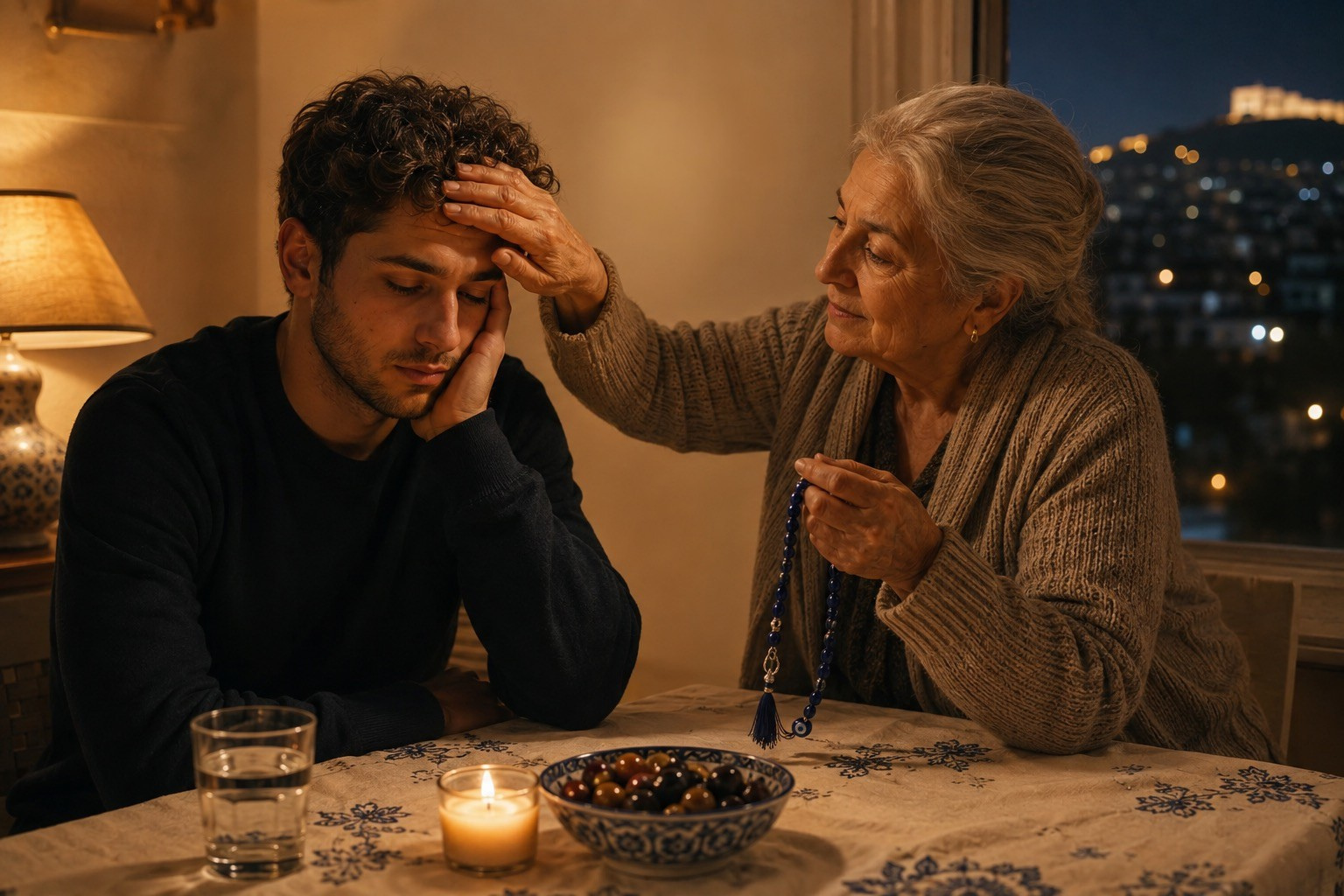

A grandmother notices someone yawning too much at dinner, rubbing their eyes, seeming unusually tired before it's even late. Before anyone goes to bed, she offers to say the prayer. For some Greek families, this is a familiar kind of scene, rooted in the belief that if you have the evil eye, you should try to have it removed before sleep.
The reason is simple: according to traditional belief, going to bed while still affected by the mati may leave you feeling restless, drained, or unusually tired when you wake up.
But as with many traditions surrounding the evil eye, experiences and beliefs vary from family to family.
The Evil Eye and Feeling Drained
In Greek tradition, the evil eye, or mati, is often associated with symptoms such as headache, heaviness, excessive yawning, or a general feeling that something is "off." These experiences are traditionally believed to occur after receiving intense attention, admiration, or envy, sometimes without the other person intending any harm.
For someone who believes they are experiencing the mati, bedtime does not necessarily mean those feelings disappear. Some people describe sleeping poorly, waking during the night, or waking in the morning still worn out. Within the tradition, this may be understood as the evil eye having remained with the person overnight.
Why Xematiasma May Be Done Before Bed
This is one reason some Greek families prefer to perform xematiasma, the traditional prayer for removing the evil eye, before the person goes to sleep.
The intention is not to create fear. It's a parent, grandparent, or other relative noticing that someone seems tired or uncomfortable and offering to say the prayer so they can settle down, rest, and wake up feeling more like themselves.
What Tradition Says, What Science Doesn't
There is no scientific evidence establishing the evil eye as a medical cause of insomnia, fatigue, or other sleep problems. The connection between the mati and poor sleep belongs to cultural and spiritual tradition, as well as the personal experiences people associate with it.
That distinction matters. Feeling tired after a bad night's sleep is common and can have many ordinary explanations. Persistent fatigue, headaches, sleep disturbances, or other concerning symptoms should not automatically be attributed to the evil eye or treated only with xematiasma.
A Tradition Centered on Care
Perhaps the most meaningful part of this belief is not the idea that something bad will happen if you fall asleep with the evil eye. It is the instinct to look after someone before they rest.
So when someone says, "Don't go to sleep with the mati," it doesn't necessarily need to be understood as a warning. For many families, it is another way of saying: let's take care of you before you go to bed.


