


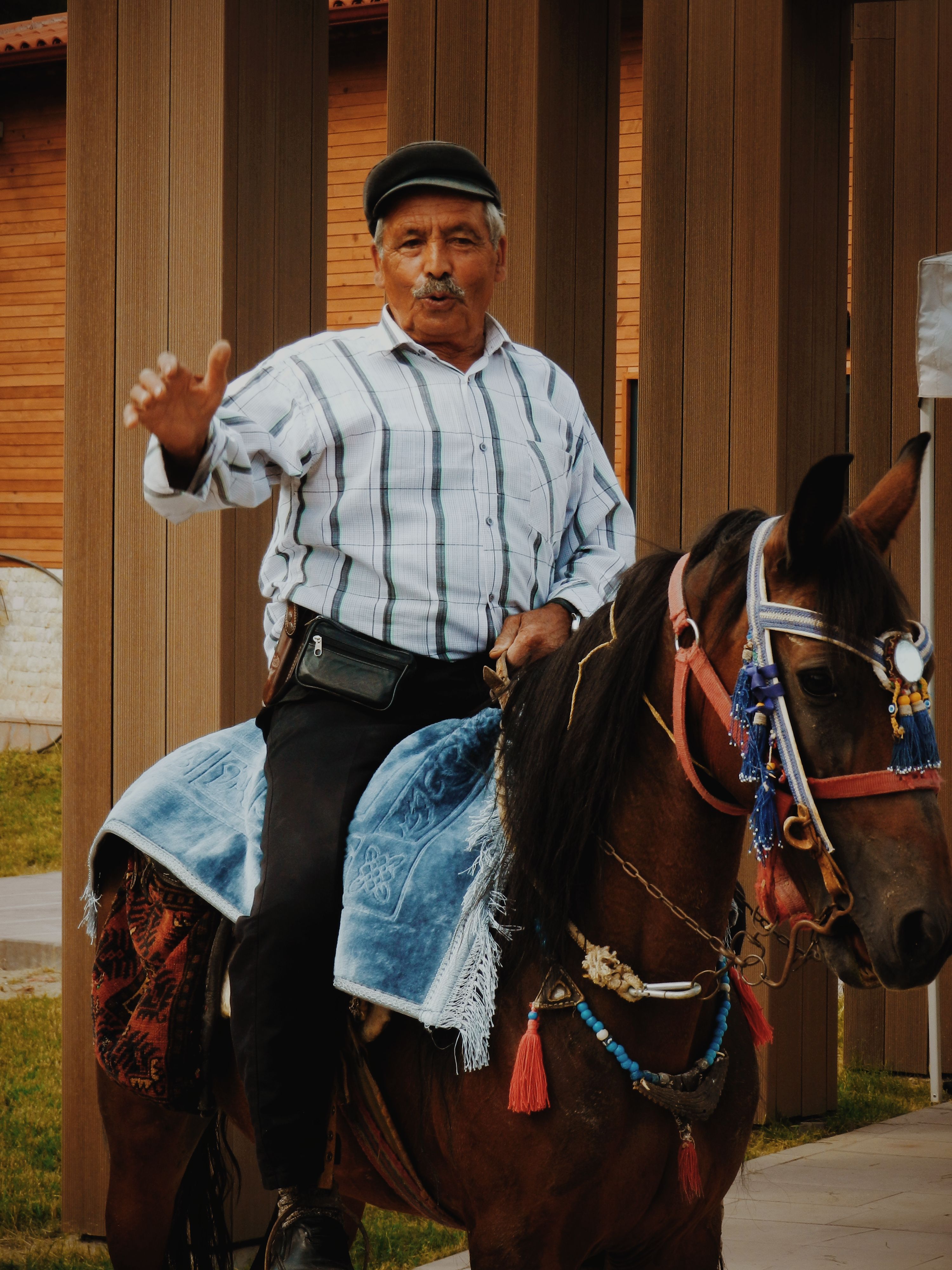

This story is based on an account passed down in one Greek family and shared with us directly.
The horse could count. Tap its hoof twice for yes, once for no, if you asked it the right kind of question in the right kind of voice. It could bow on command, stand perfectly still on cue, holding the pose until it was told it could move again. And when asked, it could rise onto its hind legs and stand tall.
The grandfather had raised it from a foal, and he’d taught it every one of those tricks himself, patiently over the years, the way you teach something you actually love rather than something you just own.
By the time the horse was grown, word of it had made its way around the village more than once. People asked about it at the market. Someone always brought it up at church, wondering when they’d finally get to see this famous horse for themselves. So one afternoon, the grandfather saddled it up and rode into the village to show them.
An Afternoon in the Village
A crowd gathered in the village almost immediately, the way crowds do the moment something unusual happens in a small place where not much usually does.
Children pressed in close. Old men who’d sworn off being impressed by anything years ago found themselves leaning on their canes to get a better look.
The horse bowed. It counted. It stood perfectly still on command. And then it rose to its hind legs, showing everyone what its owner had spent years teaching it to do. For an afternoon, everyone wanted to see the horse.
Something Was Off
By the time he led the horse back into its stall, he could tell something had changed. It was lethargic; low energy, barely responsive, none of the alertness it usually had in the evenings. It didn’t seem interested in much of anything, not its feed, not him, not the routine it normally moved through without needing to think about it.
He sat with it a while, the way you do with an animal you’ve raised from a foal, trying to figure out what was wrong through nothing more than watching. Nothing added up.
The horse hadn’t been ridden hard. It hadn’t eaten anything strange. It had spent the whole afternoon doing something it had knew how to do, surrounded by people who couldn’t stop looking at it. And that was when the grandfather understood what he believed had happened.
All those eyes
In the tradition he knew, the evil eye didn’t require someone to mean harm. Admiration itself could sometimes be enough, especially when many eyes were suddenly fixed on something beautiful, remarkable, or deeply cherished. No one in the village needed to wish the horse ill. They gathered because they admired it. They wanted to see what it could do. But to the grandfather, all that attention mattered.
An animal, a baby, a bride, something new or beautiful, anything drawing many admiring eyes at once could be treated with particular care in traditions surrounding the mati. Looking at the horse now, so unlike itself after an afternoon at the center of everyone’s attention, the grandfather believed he knew what to do. He said the old prayer.
Almost immediately
According to the story passed down in the family, the change came almost immediately. The horse stood up. The lethargy that had worried the grandfather seemed to lift, and the animal began behaving like itself again.
To him, there wasn’t much mystery about what had happened. He believed the horse had received the evil eye after drawing so much attention and admiration in the village. He performed xematiasma, and almost immediately afterward, the horse appeared to recover.
Years later, that is how the story remained in the family. Not as something that needs to prove what caused the horse’s condition, but as a memory passed from one generation to another about a beloved animal, the attention it received, and the way one grandfather understood what happened afterward.
A horse raised from a foal. A child everyone wants to hold. A bride everyone turns to look at. A new home people gather to see. The things people admire most are often the same things families instinctively want to protect. And in this family, the story of the horse survived. Everyone wanted to see him. And when he came home changed, the man who had raised him knew what to do.


